
Addresses Personal Values, Attitudes, and Beliefs
Description: An effective health education curriculum fosters personal attitudes, values, and beliefs to support positive health behaviors. Attitudes are the way a person thinks and feels about something or someone, values are individual beliefs that motivate people to act one way or another, and beliefs are ideas that a person accepts or considers to be true.
An effective health education curriculum provides instructional strategies and learning experiences that motivate students to critically examine personal perspectives, thoughtfully consider new arguments to support health-promoting attitudes and values, and generate positive perceptions about protective behaviors and negative perceptions about risk behaviors. Students develop attitudes, values, and beliefs that support healthy behavior through experience and exposure to others modeling the health-enhancing attitudes, values, and beliefs.1
This characteristic is not values clarification (e.g., engaging students in a debate that focuses on whether marijuana should be legalized for recreational use); instead, it describes learning experiences that encourage students to critically think about how their own attitudes, values, and beliefs support the adoption of healthy behaviors.
It is important to establish and maintain a classroom climate in which the teacher and the students consistently model and endorse healthy attitudes, values, and beliefs. It is the teacher’s role to be the “bridge builder” to help students to take the functional information learned and apply it to their lives and to foster new attitudes, values, and beliefs needed to adopt healthy behaviors.

Example 1
For this example, the unit that is being taught is Promoting Mental and Emotional Health, and the HBO for this lesson is MEH-8: Establish and maintain healthy relationships (HECAT Appendix 3).

- The students have already learned about
- Relationships in families, peer groups, schools, and communities,
- Strategies for effectively communicating feelings to family members,
- Examples of helping, being respectful of, and considering others, and
- Cooperation.
- To start this lesson, the teacher has the students work in small groups to complete two lists:
- The qualities of healthy relationships with friends and family members
- The benefits of healthy relationships
- The students share their lists with the rest of the class.

- Next, the students write about a healthy relationship that they have with a friend or family member, answering three questions:
- What are reasons you think the relationship is healthy?
- What are the benefits of this healthy relationship?
- Why is this relationship important to you?
- The teacher forms three- to four-person groups, and students share their responses with the group.
- The teacher concludes the lesson by asking the students to explain why it is important to establish and maintain healthy relationships.
Example 2
For this example, the unit that is being taught is Promoting an Alcohol- and Other Drug-Free Lifestyle, and the HBO for this lesson is AOD-1: Use prescription and over-the- counter medications correctly (HECAT Appendix 3). The specific focus of this lesson is medication safety.
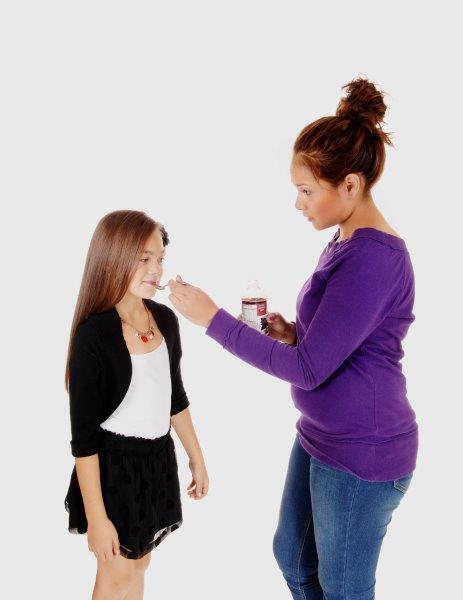
- The students have already learned definitions and examples of
- Over-the-counter and prescription drugs,
- The benefits of medications when used correctly,
- How to use medications correctly (e.g., get help from a trusted adult, carefully follow directions, take correct amounts at the right times, use only when needed),
- The potential risks associated with inappropriate use of over-the-counter and prescription drugs, and
- The importance of not sharing medications.
- The teacher reinforces that it is important to always use medications correctly by getting help from a trusted adult, carefully following directions, and using medications only when needed.
- The teacher shows a video related to medication safety (e.g., https://www.youtube.com/ watch?v=1M21HNpx05w) that shows children the students’ age using medication safety and expressing the beliefs that it is always important to have help from a trusted adult, carefully follow directions, and use medications only when needed.
- The teacher concludes the lesson by having the students describe how to use medications correctly and explain why it is also important for them to always have help from a trusted adult when using medications..
To see in PDF format, please click here.