
Provides Opportunities to Make Positive Connections with Influential Others
Description: An effective curriculum links students to influential persons who affirm and reinforce health-promoting norms, attitudes, values, beliefs, and behaviors. Instructional strategies build on protective factors that promote healthy behaviors and enable students to avoid or reduce health risk behaviors by engaging peers, parents, families, and other positive adult role models in student learning. Teachers should not assume that all parents, guardians, or caregivers are positive influences and that every student has a positive influential person in their life. Therefore, it is important to help connect students with positive, influential adults in the school and the community.1

Example 1
For this teaching example, the unit being taught is Personal Health and Wellness, and the HBOs for the lesson are PHW-11: Seek out health care professionals for appropriate screenings and examinations, and PHW-10: Use health care services to address common infectious diseases and manage chronic diseases and conditions (HECAT Appendix 3).
1. The 6th grade students have recently transitioned into a new secondary school that has a school-based health center (SBHC). Before 6th grade, many students did not have access to a SBHC.
2. The health educator introduces the students to the concept of the SBHC and takes students on a “field trip” to meet the SBHC staff and tour the facility. Each student leaves with a pamphlet of available services and information on how to access health care if needed.
Example 2
For this teaching example, the units being taught are Violence Prevention and Mental and Emotional Health. The HBOs for the lesson are V-7: Get help to prevent or stop violence including harassment, abuse, bullying, hazing, fighting, and hate crimes, VP-10: Get help for oneself or others who are in danger of hurting themselves, and MEH-8: Establish and maintain healthy relationships (HECAT Appendix 3).
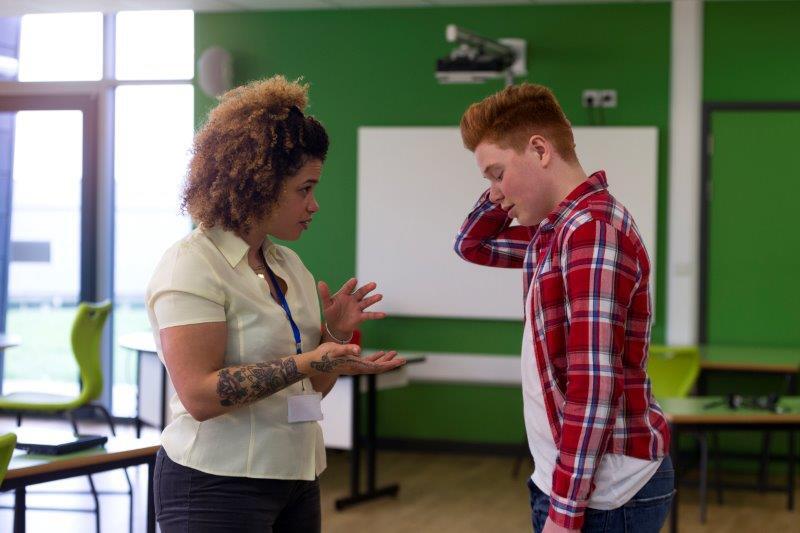
1. There has been an increase in student disciplinary referrals for harassment, inappropriate behaviors, and concerns about self-injurious behaviors. In response to these concerns, the Student Assistant Team, which includes the health educator, has started a school-wide student-mentoring initiative.
2. All faculty and staff (including teachers, custodians, nurses, food service workers) have been previously introduced to and trained on the following: the goals of the mentoring initiative, including the rationale for instituting such a program, based on localized data; staff roles and responsibilities; the plan of events; suggested mentoring strategies; and the lead contacts and resources for project (health educators). Students will be assigned to their mentors using basic randomization methods that will ensure inclusion of all students in the program. Staff and faculty are then asked to introduce themselves to their assigned students. As part of their introduction, the mentors will let students know that they are available should students have any questions or concerns or need to talk to an adult about their personal safety or the climate and culture within the school building. Ideally, the mentor will have an informal checkin with their mentees once a day or at least three times a week. The check-in could be a hello by name and a discussion to find out what hobbies they have, how their classes are going, and any safety concerns. This mentoring initiative is supported by classroom instruction delivered in the health education curriculum addressing the HBOs listed above. This activity supports the research of the importance of having a positive adult influence and supports student connectedness to the school.2
To view in PDF format, please click here.