
Builds Personal Competence, Social Competence, and Self-Efficacy by Addressing Skills
Description: An effective curriculum builds essential health-enhancing skills that enable students to build their personal confidence, deal with social pressures, and avoid or reduce risk behaviors. Essential health-enhancing skills included in the National Health Education Standards1 and the Centers for Disease Control and Prevention’s (CDC’s) Health Education Curriculum Analysis Tool (HECAT)2 are
- Analysis of internal and external influences,
- Assessment of valid and reliable health information, products, and services,
- Communication skills (e.g., refusal, conflict resolution, negotiation, and expressing feelings),
- Decision-making,
- Goal setting,
- Self-management, and
- Advocacy.
Health skills are critically important to teach in every health unit that is taught at each grade level. The goal for school districts is to teach every health skill at least two times, in two different health content areas, at every grade level. Therefore, it is important for curriculum directors and health teachers to be purposeful and thoughtful about which skills to include in each health content area and at each grade level. Several questions should be answered when making these decisions.
- Which skill(s) will be most likely to help students adopt the selected Healthy Behavior Outcomes (HBOs) in the unit?
- How many lessons are dedicated to each health topic that is taught?
- What is the developmental level of the students?
- What skills have already been taught at this grade level in other units?
- What health skills are being taught at each grade level for each topic that is taught (scope and sequence)?

Once decisions have been made regarding the health skills to be included in each health content area at each grade level, teachers may find the HECAT helpful. The HECAT includes a list of priority skill expectations to further delineate the health skills for each grade level span (e.g., K–2, 3–5, 6–8, and 9–12) (HECAT Skill Expectations).
For students to be successful in mastering a health education skill, lessons need to include the following instructional developmental steps:
Step 1: Discuss the importance of the skill, its relevance, and its relationship to other learned skills.
Step 2: Present steps for developing the skill.
Step 3: Model the skill.
Step 4: Practice and rehearse the skill using real-life scenarios.
Step 5: Provide feedback and reinforcement.
When teaching a health skill, all these steps are imperative. It isn’t adequate to introduce the skill, present the steps of the skill, and model the skill. If students don’t have multiple opportunities to practice and apply the skill and receive feedback, it is unrealistic to expect students to master the skill.
Example 1
The unit being taught is Tobacco, and the HBO for the lesson is T1: Avoid using (or experimenting with) any form of tobacco (HECAT Appendix 3).
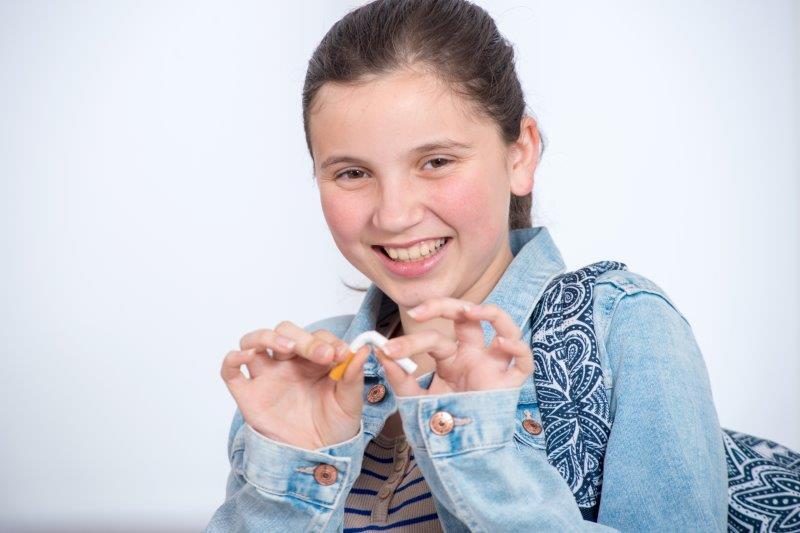
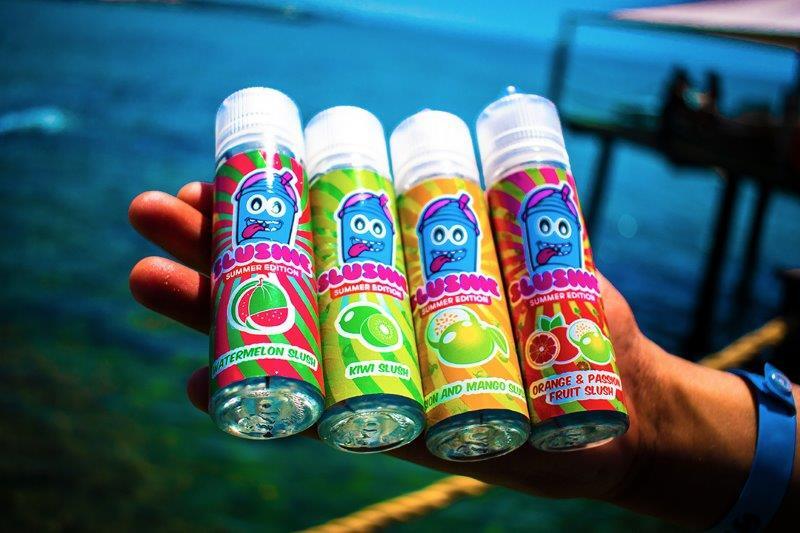
- The focus for this activity is on refusal skills. Students will focus on interpersonal communication— specifically, learning how to demonstrate effective refusal skills to avoid using vaping products. Prior to this activity, the students learned the dangers of experimenting with vaping products, situations that could lead to the use of vaping, and the benefits of not vaping.
- Step 1: Discuss the importance of the skill, its relevance, and its relationship to other learned skills.
The teacher posts the term “peer pressure” on a whiteboard and asks students to write their definition of “peer pressure” on a sticky note. Once they have completed their definitions, the teacher asks students to list on another sticky note what kinds of things young people may feel pressured to do by their peers. The students post their responses on the whiteboard, and the teacher reads the student-generated definitions of “peer pressure.” The teacher explains that peer pressure is the feeling that a person has to do the same things as their peers in order to be liked or accepted. Sometimes these things are positive, and sometimes they are negative. The teacher reads the sticky notes of things that students may feel pressured to do. The teacher then explains that during today’s lesson, they are going to discuss peer pressure and skills for refusing the use of vaping products. The teacher tells the students that they can learn how to use refusal skills to resist pressures to vape.
- Step 2: Present steps for developing the skill. There are several ways to refuse pressure from your peers to do negative things. The teacher asks the students for examples of strategies to refuse the pressure from a peer to use vaping products. As students share their ideas, the teacher processes their responses on the whiteboard.
The teacher then hands out a list of the five strategies for responding to and resisting peer pressure. The teacher discusses and models each.- Use verbal communication. Say “no” in a firm tone. Communication should be assertive and respectful.
- Use nonverbal communication. Make eye contact, hold your head up, stand up straight, and use a loud and clear tone of voice.
- Express why you do not use vape products—for example, I care about my own health, I don’t want to disappoint my family, I value my future, etc.
- Offer alternatives to prevent vaping. Blame parents or household rules, or suggest other activities such as going to the movies.
- Have a plan to leave the situation if it becomes unsafe. Walk away, or call a parent or trusted adult.
- Step 3: Model the skill. The teacher asks for two student volunteers to model refusal skills. The teacher provides a scenario of one student pressuring another to try vaping. The second student models assertive verbal communication and nonverbal body language, expresses why they do not want to vape, offers alternatives, and has an escape plan. Each method is modeled.
- Step 4: Practice and rehearse the skill using real-life scenarios. Students are divided up into groups of three to practice the five strategies. Two students will role-play, and one will observe. Roles will be rotated so each student has an opportunity to practice all refusal skills.
- Step 5: Provide feedback and reinforcement. The teacher rotates around to each group to monitor, and together with the student observer, they provide feedback and reinforcement.
- The students are then asked to write a reflection about how confident they are in using an effective form of interpersonal communication, including refusal skills, to help influence them to avoid using (or experimenting with) any vaping product.
Example 2
The unit being taught is Sexual Health, and the HBOs for the lesson are SH-5: Be sexually abstinent, SH-6: Engage in behaviors that prevent or reduce sexually transmitted infections (STIs) including HIV, and SH-7: Engage in behaviors that prevent or reduce unintended pregnancy (HECAT Appendix 3).
- The focus for this activity is responsible decision-making. Prior to this activity, students have been taught about the importance of setting personal limits to avoid sexual risk behaviors; the benefits of being sexually abstinent; why sexual abstinence is the safest, most-effective risk-avoidance method of protection from STIs, including HIV, and unintended pregnancy; and the factors that protect against engaging in sexual risk behaviors.
- Step 1: Discuss the importance of the skill, its relevance, and its relationship to other learned skills. The teacher starts the activity by saying that we all make decisions every day; some are simple, and some are more detailed. All decisions have consequences. The teacher asks students to think about a decision they have made recently and calls on several students to share their examples and how they felt making different decisions. The teacher explains that they are going to learn the steps for decision-making and how they can use this skill in many aspects of their lives. The focus today is on the healthy behavior of being sexually abstinent and avoiding STIs/HIV. The teacher tells the students that they can learn how to apply decision-making steps to be sexually abstinent and avoid and reduce their risk of STIs/HIV and unintended pregnancy.
- Step 2: Present steps for developing the skill and Step 3: Model the skill. (These steps are sometimes taught together—the teacher will explain and then model the steps of decision-making).

- The teacher reads a scenario to the students:
- You have been having strong romantic feelings for one of your classmates, and you think they feel the same way. You have been asked to come over to their house after school to play video games, which sounds like fun; however, you know that their parents won’t be home until after work. Even though you would love to go and spend more time with them, your gut tells you it may not be a good idea. What should you do?
- The steps of responsible decision-making are then presented through the DECIDE model. Based on the complexity of the decision, you may not always need to go through each step. However, it is important to know the process when needed:
- Define the decision that needs to be made. (Does a decision need to be made, and do I need help from a friend or trusted adult?)
- Explore your options. (Make a list of options.)
- Consider the consequences. (What are the positive and negative outcomes for each option?)
- Identify your values (influence of family, culture, technology, peers, and personal beliefs).
- Decide and act. (What is the best choice based on the information?)
- Evaluate the results. (Are you happy with the results, and would you make the same choice again or change next time?)
- The teacher reads a scenario to the students:
- Step 4: Practice and rehearse the skill using real-life scenarios. After the teacher finishes modeling the steps of decision-making (Step 3), the students find a partner and identify a decision that students their age may be confronted with related to being sexually abstinent and avoiding STIs and HIV. The students will work together and complete the steps of the DECIDE model.
- Step 5: Provide feedback and reinforcement. The students share their completed DECIDE steps with a partner and then share with the class. The teacher and others provide feedback for each scenario.
- The students complete an exit ticket about how confident they are in using the DECIDE model to promote sexual abstinence and to protect from STIs/HIV and unintended pregnancy.
To see in PDF format, please click here.