
Incorporates Learning Strategies, Teaching Methods, and Materials That Are Culturally Responsive and Inclusive
Description: Effective curricula have materials that are free of culturally biased, oppressive, and discriminatory information, scenarios, examples, images, graphics, and audiovisuals.
All curricula contents (e.g., information, student-learning activities, and assessments) depict and are inclusive of diverse student demographics, identities, cultures, health behaviors, and lived experiences. This includes but is not limited to the variety of sexes, gender identities and expressions, races, ethnicities, classes, religions, ages, geographic regions, physical and mental abilities, appearances, sexual identities and orientations, and family or caregiving structures identified and experienced by students. Strategies that promote values, attitudes, and behaviors that acknowledge and affirm the cultural diversity of each student; optimize relevance to students from multiple cultures in the school community; strengthen students’ skills necessary to engage in intercultural interactions; and build on the cultural assets and resources of families and communities are necessary in health education curricula and instruction.1
According to the Centers for Disease Control and Prevention’s Health Education Curriculum Analysis Tool (HECAT), characteristics of culturally responsive and inclusive health education curricula should include the following elements:2
- Health content and skills tailored to specific student demographics (e.g., race, ethnicity, sex, age, and grade), identities, health behaviors, and lived experiences
- Consistent incorporation of diverse identities, cultures, narratives, and beliefs throughout curriculum lessons, activities, and assessments
- Consideration of the social determinants of individual and community health from diverse social, cultural, political, and historical contexts across health topic areas
- Opportunities for students to think critically about individual (e.g., implicit bias) and systemic (e.g., institutionalized racism) factors that perpetuate health disparities and serve as barriers to health equity
- Incorporated strategies to help students navigate or combat stressors (e.g., discrimination, harassment, or stereotypes) and systems of oppression that negatively impact health3
- Data, scenarios, and examples that communicate a positive framing of health and human development and that represent people of diverse races, ethnicities, classes, sexes, genders, abilities, and sexual orientations through strengths, achievements, and assets rather than perceived deficits
Example 1
For this teaching example, the lesson being taught is that we are all unique and special, and the Healthy Behavior Outcomes (HBOs) for this lesson are MEH-7: Show acceptance of difference in others and MEH-8: Establish and maintain healthy relationships (HECAT Appendix 3).
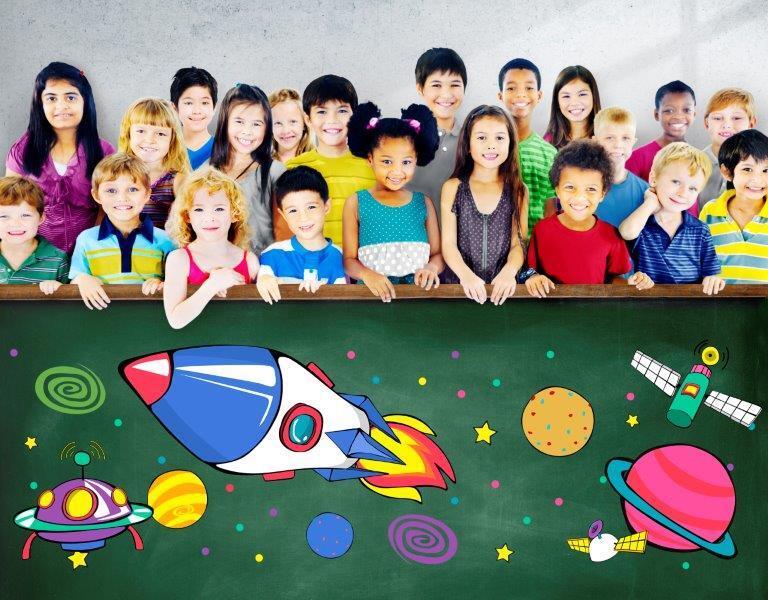
- The teacher starts the lesson by showing and posting a series of pictures that depict a variety of children who are different in many ways, including but not limited to age; hair, eye, or skin color; height; body type; ability and disability; religion; culture; and facial expression (e.g., happy or sad).
- The teacher explains to the students that the children in the pictures may be the same as or different from them in many ways.
- The teacher asks the children to raise their hands if they see a child in the picture who is the same as them in some way. The teacher calls on several students to share answers.
- The teacher also asks the children to raise their hands if they see a child in the picture who is different from them in some way. The teacher calls on several students to share answers.
- The teacher explains that although there are some ways in which each student is the same as or similar to their classmates, there are also many ways that they are different.
- The teacher explains that the differences between the students and other children are what makes them special and unique.
- The teacher then asks each student to tell one thing about themselves that makes them special or unique.
- The teacher explains to the students that it is always important to be kind to other children who are different from them. Kindness is thinking about the feelings of others and doing things to help others feel good.
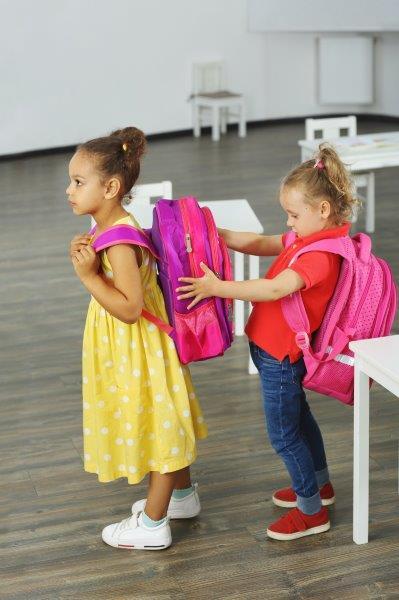
- The teacher then asks the students to share ways in which they can be kind to other children who are different than them. Examples of ways that children can be kind to others include
- remembering that the feelings of others are important,
- including others by asking them to play with you on the playground or to sit by you during lunch or circle time,
- talking with and listening to others,
- saying nice things to others, such as “You are a good friend,” or “I like your haircut,” and
- helping them, especially when they are hurt or upset.
- The teacher reminds the students that being kind to others who are different than them is a great way to make new friends and have healthy relationships with one another.
Example 2
For this teaching example, the lesson being taught is that our families are unique and special, and the HBO for this lesson is MEH-7: Show acceptance of difference in others (HECAT Appendix 3).
Note: The HECAT lists sexual health knowledge expectations for students in grades Pre-K–2 that are aligned with the HBOs for this lesson, including but not limited to the following:
- Recognize the range of different family and peer relationships (e.g., nuclear, single parent, blended, intergenerational, cohabiting, adoptive, foster, and same sex or gender).
- Explain why it is wrong to tease or bully others based on personal characteristics (e.g., sex, race, ethnicity, culture, sexual orientation, appearance, abilities, mannerisms, or the way one dresses or acts).
- The teacher starts the lesson by showing and posting a series of pictures that depict a variety of families who are different in many ways, including but not limited to nuclear, single parent, blended, intergenerational, cohabiting, adoptive, foster, same sex or gender (e.g., one picture shows one parent; one picture shows grandparents living at home with the child; one picture shows two dads).
- The teacher explains to the students that the families in the pictures may be the same as or different from their families in many ways.
- The teacher asks the children to raise their hands if they see a picture of a family who is similar to their family.
- The teacher then asks the children to raise their hands if they see a family who is different from their family in the pictures.
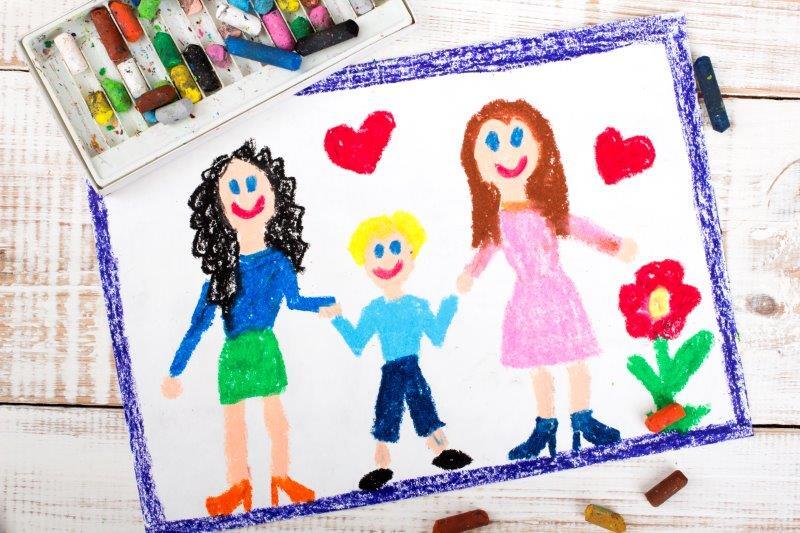
- The teacher explains that although there are some ways in which families are the same as or similar to classmates, there are also many ways that families may be different from the families of their classmates (e.g., some families have a mom and a dad, some families have parents who are divorced, and some families have two moms or two dads).
- The teacher explains that the differences between their families and the families of other children are what make each family special and unique.
- The teacher then asks each student to draw a picture of their family.
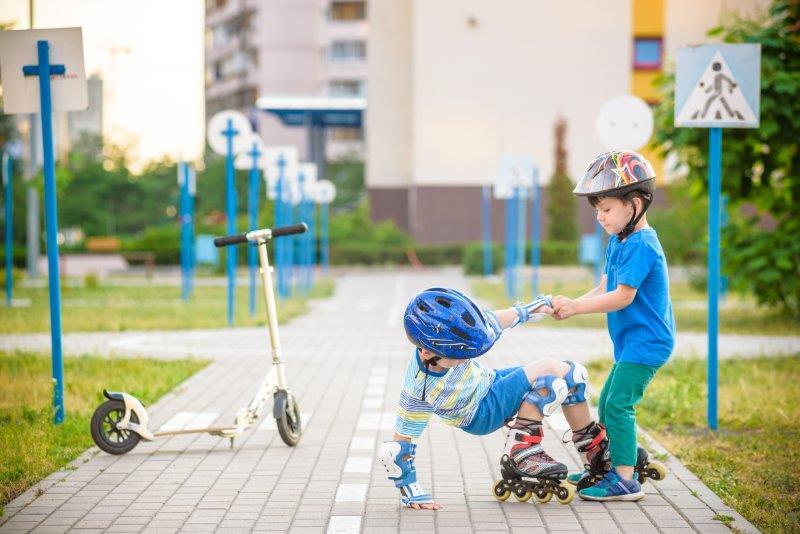
- The teacher explains to the students that it is always important to be kind to other children who have families who are different than their families. Kindness is thinking about the feelings of others and doing things to help others feel good.
- The teacher then asks the students to tell them ways in which they can be kind to other children who have families who are different from, or not the same as, their families. Examples of ways that children can be kind to others include
- remembering that the feelings of others are important,
- including them when you are playing or having lunch,
- not hurting their feelings by saying or doing mean things,
- talking with and listening to them,
- saying nice things to them, like “It is fun to play with you,” and
- helping them, especially when they are hurt or upset.
- The teacher reminds the students that showing acceptance and being kind to others who are different from them is a great way to make new friends and have healthy relationships with one another.
To see in PDF format, please click here.