
Includes Teacher Information and Plans for Professional Development and Training That Enhance Effectiveness of Instruction and Student Learning
Description: An effective health education curriculum is implemented by teachers who have a personal interest in promoting positive health behaviors, believe in and are passionate about what they are teaching, demonstrate knowledge and comfort with curriculum content, and are skilled in implementing expected instructional strategies.
Effective health teachers attend ongoing professional development and training, which is critical for helping them implement a new curriculum or implement strategies that require new skills in teaching or assessment.1

Example 1
For this teaching example, the lesson that is being taught is getting help for unsafe touch, and the Healthy Behavior Outcome (HBO) for this lesson is V-8: Get help to prevent or stop unwanted or inappropriate touching (HECAT Appendix 3).

1. The elementary teachers and other personnel including the school’s nurse, counselor, social worker, and principal have created a team to locate lessons to teach students how to ask for help related to unwanted or inappropriate touch. They used the Health Education Curriculum Analysis Tool (HECAT) to identify the following knowledge expectations for children in grades K–2:
a. Describe the difference between wanted and unwanted touch.
b. Explain why unwanted touch or inappropriate touches should be reported to a trusted adult.
c. Explain that a child is not at fault if someone touches them in an unwanted or inappropriate way.
d. Explain why everyone has the right to tell others not to touch their bodies.
The teachers, school nurse, counselor, social worker, and principal also used the HECAT to develop the following skill expectations:
a. Identify trusted adults at home and professionals at school who students can tell about unwanted or inappropriate touch.
b. Demonstrate how to effectively tell a trusted adult when experiencing unwanted or inappropriate touch.
c. Demonstrate effective refusal skills including firmly saying “no” and moving away to avoid unwanted or inappropriate touch.
2. The team seeks and locates a program related to unwanted or inappropriate touch for primary grades students. The program meets the following criteria:
a. Addresses the functional knowledge and health-related skills related to unwanted or inappropriate touch educators identified for their students
b. Provides training for teachers and other school personnel related to the delivery of the program
3. All K–2 teachers and other school personnel including the nurse, counselor, social worker, and principal receive training to implement the program.
Example 2
For this teaching example, the unit that is being taught is Food and Nutrition, and the HBOs for this lesson include FN-1: Follow a healthy eating pattern that meets individual preferences and needs for growth and development, FN-2: Choose a variety of foods within each food group, FN-3: Eat lots of fruits and vegetables, and FN-8: Limit foods high in sugar, saturated fats, trans fats, and sodium (HECAT Appendix 3).
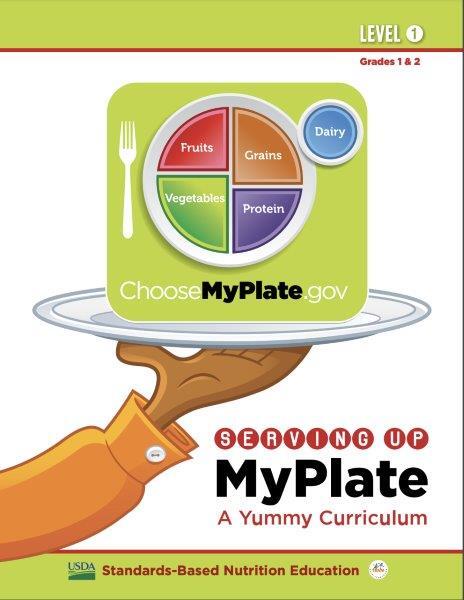
1. The school has adopted the Serving Up MyPlate: A Yummy Curriculum developed by personnel at the United States Department of Agriculture as part of its health education curriculum.
2. The curriculum director plans a professional development day for the teachers and other school personnel related to the implementation of this curriculum. In preparation for this day, the teachers are instructed to download the curriculum (https://www. fns.usda.gov/tn/serving-myplate-yummy-curriculum) specific to their grade level and review the lessons, learning objectives, lessons including information for teachers, student handouts, and related materials.
3. The teachers meet by grade level to discuss the program and share ideas related to the effective implementation of the curriculum.
To view in PDF format, please click here.