

Builds Personal Competence, Social Competence, and Self-Efficacy by Addressing Skills
Description: An effective curriculum builds essential health-enhancing skills that enable students to build their personal confidence, deal with social pressures, and avoid or reduce risk behaviors. Essential health-enhancing skills included in the National Health Education Standards1 and the Centers for Disease Control and Prevention’s (CDC’s) Health Education Curriculum Analysis Tool (HECAT)2 are
- Analysis of internal and external influences,
- Assessment of valid and reliable health information, products, and services,
- Communication skills (e.g., refusal, conflict resolution, negotiation, and expressing feelings),
- Decision-making,
- Goal setting,
- Self-management, and
- Advocacy.
Health skills are critically important to teach in every health unit that is taught at each grade level. The goal for school districts is to teach every health skill at least two times, in two different health content areas, at every grade level. Therefore, it is important for curriculum directors and health teachers to be purposeful and thoughtful about which skills to include in each health content area and at each grade level. Several questions should be answered when making these decisions.
- Which skill(s) will be most likely to help students adopt the selected Healthy Behavior Outcomes (HBOs) in the unit?
- How many lessons are dedicated to each health topic that is taught?
- What is the developmental level of the students?
- What skills have already been taught at this grade level in other units?
- What health skills are being taught at each grade level for each topic that is taught (scope and sequence)?

Once decisions have been made regarding the health skills to be included in each health content area at each grade level, teachers may find the HECAT helpful. The HECAT includes a list of priority skill expectations to further delineate the health skills for each grade level span (e.g., K–2, 3–5, 6–8, and 9–12) (HECAT Skill Expectations).
For students to be successful in mastering a health education skill, lessons need to include the following instructional developmental steps:
Step 1: Discuss the importance of the skill, its relevance, and its relationship to other learned skills.
Step 2: Present steps for developing the skill.
Step 3: Model the skill.
Step 4: Practice and rehearse the skill using real-life scenarios.
Step 5: Provide feedback and reinforcement.
When teaching a health skill, all these steps are imperative. It isn’t adequate to introduce the skill, present the steps of the skill, and model the skill. If students don’t have multiple opportunities to practice and apply the skill and receive feedback, it is unrealistic to expect students to master the skill.
Example 1
The unit being taught is Emotional and Mental Health, and the HBO for the lesson is EMH-8: Establish and maintain healthy relationships (HECAT Appendix 3).
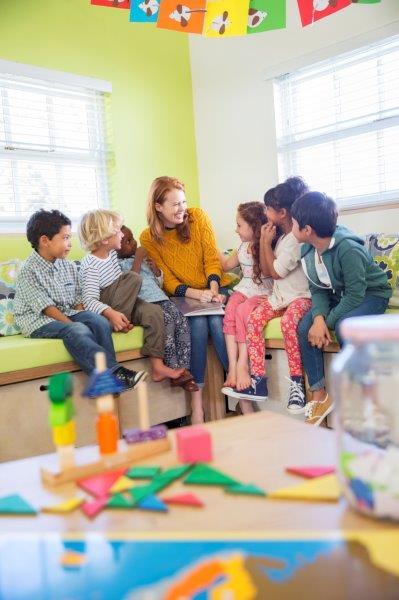
Note: The skill in this example is active listening, which will help establish and maintain healthy relationships.
- Step 1: Discuss the importance of the skill, its relevance, and its relationship to other learned skills. The teacher begins the lesson by reading a story that emphasizes listening as an important part of healthy relationships.
- The teacher asks the students:
- Why is listening important when we are with our families and friends or at school?
- What is a good listener doing when they are listening to a family member or a teacher?
- The teacher tells the students that the teacher is confident that the students will be able to develop good listening skills.
- The teacher asks the students:
- Step 2: Present steps for developing the skill. The teacher shows and discusses a poster of the steps to being a good listener. For example,
- Look at the person who is talking (eyes),
- Focus on what they are saying (ears),
- Wait patiently for them to finish talking (hands, feet, and body still), and
- Ask questions if you don’t understand what they have said.
- Step 3: Model the skill. The teacher next models the skill:
- They ask a student to tell them about a feeling, event, or something they enjoy.
- They remind students to watch for the teacher to
- Look at the student,
- Focus on what the student is saying,
- Wait for the student to finish talking, and
- Ask questions.
- Step 4: Practice and rehearse the skill using real-life scenarios. The teacher asks students to practice and rehearse listening to another student tell them about a feeling, event, or something they enjoy.
- Step 5: Provide feedback and reinforcement. As the students are practicing with a partner, the teacher walks around the room and provides feedback and reinforcement to the students (e.g., nice job looking at your partner when they are talking, what questions could you ask your partner, good job letting your partner finish talking before you started talking).
- The teacher closes the lesson by asking two questions:
- Why is it important to be a good listener?
- What are the steps to being a good listener?

Example 2
The unit being taught is Physical Activity, and the HBO for the lesson is PA-1: Engage in moderate to physical activity for at least 60 minutes every day (HECAT Appendix 3).
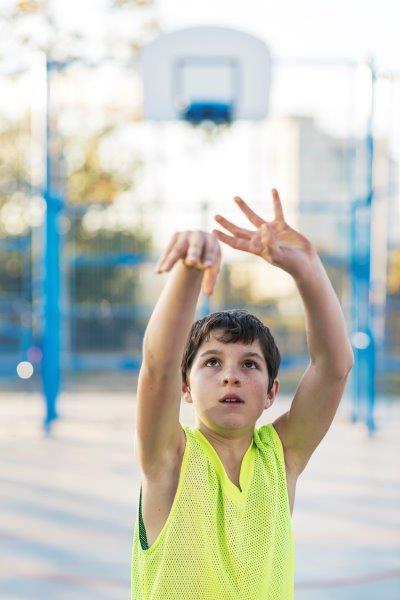
Note: The focus of this example is goal setting. (This activity would work best with 2nd grade students.)
- Step 1: Discuss the importance of the skill, its relevance, and its relationship to other learned skills.
- The teacher starts the lesson by asking and discussing with the students the following questions:
- What does it mean to set a goal?
- Why is it important to set a goal?
- The teacher then explains that a health goal is a plan to do something that keeps you healthy.
- The teacher tells the students that the teacher is confident that the students will be able to develop their own skills to set goals.
- The teacher starts the lesson by asking and discussing with the students the following questions:
- Step 2: Present steps for developing the skill. The teacher shows and discusses a poster of the steps of goal setting.
- Identify a goal. (Note to teacher: make sure that your example is a short-term goal.)
- Make a plan.
- Take action to reach the goal.
- Identify people and things to help you reach the goal.
- Step 3: Model the skill. The teacher shows and discusses with the students an example of an age- appropriate goal to be active every day.
- Step 4: Practice and rehearse the skill using real-life scenarios. The teacher provides students with a goal- setting planning worksheet that includes the following:
- Examples of well-written, age-appropriate short-term personal goals for being active every day
- An action plan that includes four elements
- A goal for being active every day
- People and things that can help them reach their goal to be active every day
- What the student will do to reach their goal to be active every day
- A chart to track their progress toward their goal to be active every day
- Step 5: Provide feedback and reinforcement. The teacher provides feedback and reinforcement to the students by
- Guiding the students in the completion of the goal-setting planning worksheet,
- Asking the students why it is important for them to have steps toward reaching their physical activity goals,
- Encouraging the students to take action to reach their physical activity goals, and
- Checking on the students’ progress toward reaching their physical activity goals.
To see in PDF format, please click here.