
Addresses Individual and Group Norms That Support Health-Enhancing Behaviors
Description: An effective curriculum (a) provides instructional strategies and learning experiences to help students accurately assess the level of risk-taking behavior among their peers (for example, how many of their peers use illegal drugs) and to correct misperceptions of peer and social norms, (b) emphasizes the value of good health, and (c) reinforces health-enhancing attitudes and beliefs.1
This characteristic focuses on reinforcing and promoting healthy social norms and getting students to believe that practicing healthy behaviors is the “cool” thing to do. This can be accomplished in several different ways.
First, it is important to provide information that helps students accurately assess levels of risk and protective behaviors by their peers or youth who share similar characteristics and experiences (e.g., age, sex, gender identity, race, ethnicity, or geographic region). When presenting health-behavior data to students, it is important to report local data when possible. Many local health departments, and even school districts, may have available data on student health risk and protective behaviors. Data should be presented in a positive way, meaning it describes the protective or beneficial behavior or outcome you want students to engage in. For example, if 25% of students in grade 10 in their school district are current alcohol users, it should be reported to students that 75% of their peers are not current alcohol users. Presenting data in this way can help promote and reinforce health-enhancing norms around a certain behavior.
Second, it is important to correct misperceptions of peer and social norms, sometimes called “perceived norms.” Perceived norms are what people think others are doing or believe. Perceived norms can be based on what people see and hear around them (e.g., from family members, peers, school staff, people in the community, or media outlets), and they are reinforced when people receive information from various sources. It is common for preadolescents and adolescents to believe that most or all of their peers are participating in risky behavior, like drinking alcohol, because of what they see, hear, or have been told by someone. Using accurate and reliable health data about adolescent behavior is critical to correct misperceptions about peer and social norms.
Third, it is important to emphasize the value of good health and to reinforce health- enhancing attitudes, beliefs, and behaviors. The teacher can help accomplish this by modeling health-enhancing behaviors, such as drinking water (instead of soft drinks) during class, and by encouraging students to adopt or maintain healthy behaviors. Teachers can also allow for opportunities for students to share their health-enhancing attitudes, beliefs, and behaviors throughout lessons. For example, the curriculum may include advocacy- related projects for students to develop persuasive messages to encourage their peers to adopt or maintain healthy behaviors.
Example 1
For this example, the unit that is being taught is Promoting Safety, and the Healthy Behavior Outcome (HBO) for this lesson is S-4: Apply safety rules and procedures to avoid risky behaviors and injuries (HECAT Appendix 3). The specific focus of this lesson is playground safety.

- Promoting individual and group norms in a lesson will typically take place after students have learned functional information and skills related to the HBO of the lesson. In this example, the students have learned about safety rules for playing on the playground and how to encourage others to follow safety rules on the playground.
- To build individual and group norms for playground safety, the students are asked to explain why it is important for each of them (individual norm), as well as everyone in the class (group norm), to follow playground safety rules.
- The students then draw a picture of themselves practicing a playground safety rule on a preprinted page that has the words “I Play Safe” (individual norm) at the top of the page and the words “We Follow Safety Rules” (group norm) at the bottom of the page. The teacher then displays the pictures and asks the students to describe their posters to their classmates (individual and group norms).
Example 2
For this example, the unit that is being taught is Promoting Food and Nutrition, and the HBO for this lesson is FN-3: Eat lots of fruits and vegetables (HECAT Appendix 3).
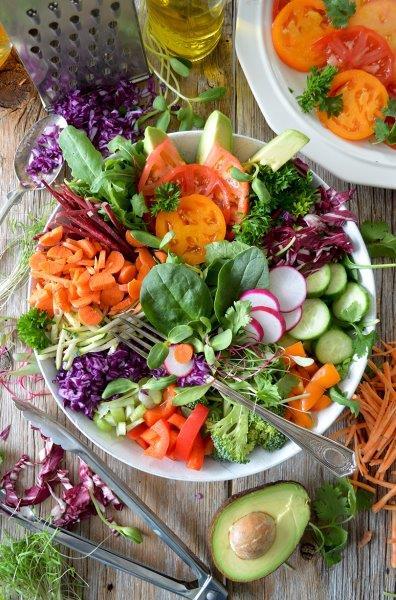
- Promoting individual and group norms in a lesson will typically take place after students have learned functional information and skills related to the HBO of the lesson. In this example, the students have learned about the food groups, the importance of eating foods from all the food groups, the benefits of choosing nutrient-dense foods that help people feel good, and the importance of trying new fruits and vegetables. They have also learned how to encourage others to eat fruits and vegetables.
- 2. The teacher works with food and nutrition services to provide a classroom fruit and/or vegetable taste test. Students are then asked to identify and share the new fruit and/or vegetable that they tried and enjoyed eating (individual norm). The class tabulates the total number of “likes” for each fruit and/or vegetable (group norm).
To see in PDF format, please click here.